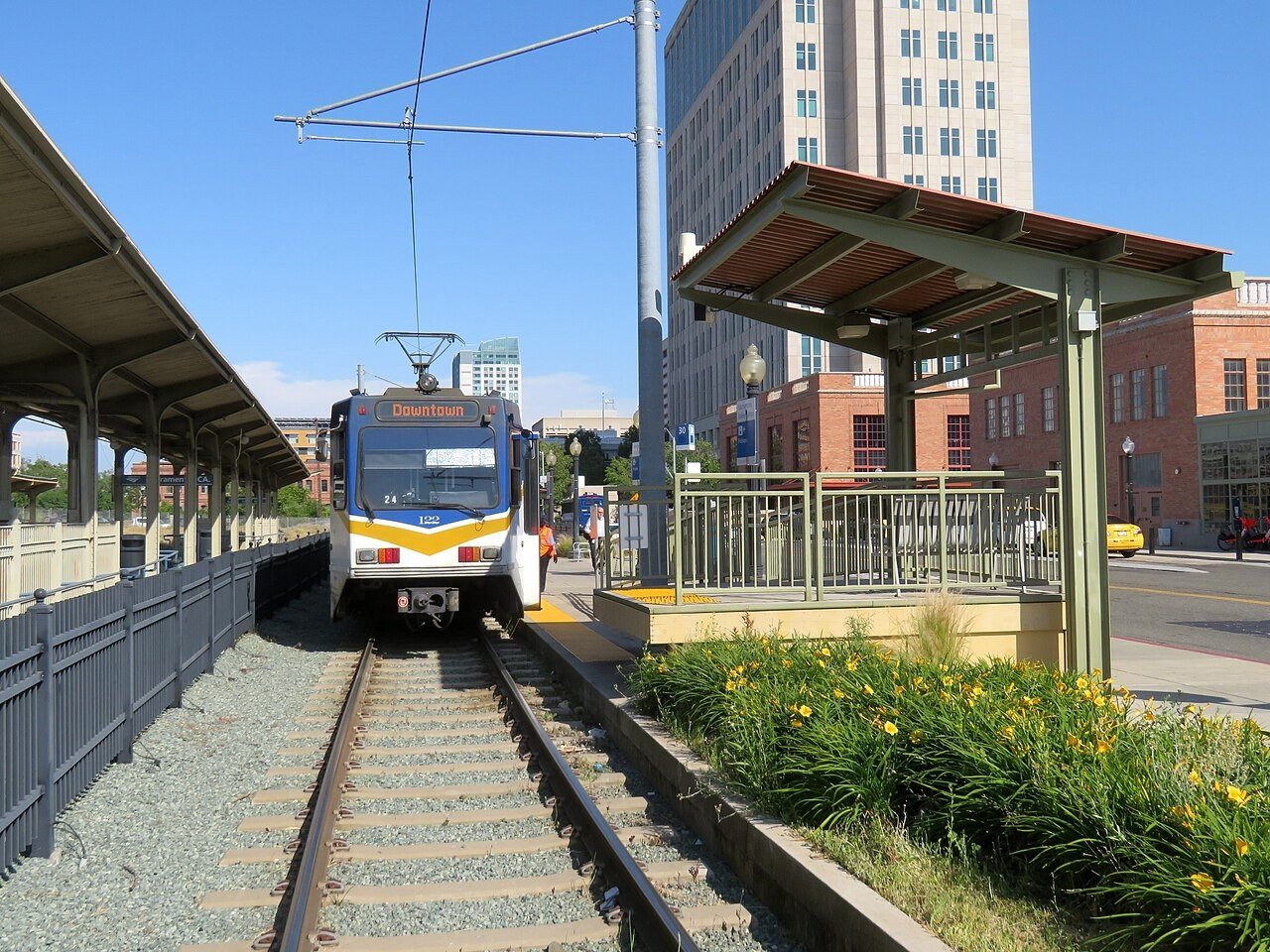
Sacramento’s light rail system covers 42.9 miles across the city and surrounding areas, connects to Amtrak at Sacramento Valley Station, and costs $2.50 for a single ride. It’s genuinely useful for getting from downtown Sacramento out to Folsom, or from the university corridor into the central city without dealing with parking. If you’re new to Sacramento or haven’t used SacRT in a while, here’s a current rundown of the routes, fares, and what to expect when you ride.
The Three Lines
SacRT light rail operates three lines:
Blue Line is the longest line, running 29 stations from Watt/I-80 in the north to Cosumnes River College in the south. It’s the main north-south spine of the system, running through downtown Sacramento and connecting to South Sacramento neighborhoods and the Cosumnes River College campus. If you’re commuting from North Sacramento or Elk Grove-adjacent areas toward downtown, this is your line.
Gold Line runs 27 stations from Sacramento Valley Station (the Amtrak hub on Richards Boulevard) east through downtown, then out through East Sacramento and the suburb corridor all the way to Historic Folsom. The Gold Line is what most visitors and commuters think of when they think of Sacramento light rail—it covers the downtown core and extends to the Folsom end that most people know. University/65th Street is a key stop for anyone heading to Sac State or the CSUS area.
Green Line is the smallest of the three, running 8 stations in the downtown core between 7th Street/Richards/Township 9 in the north and 13th Street. It operates more as a connector within the downtown grid than as a standalone commute route.
All three lines share stations in the downtown corridor, with Archives Plaza, 7th & Capitol, 8th & K, and 13th Street serving as the main hub stations where you can transfer between lines. The downtown stretch is where the lines overlap and where most people board and exit.
Fares
Current SacRT fares as listed on sacrt.com:
Standard (Age 19–61):
- Single ride: $2.50
- Transfer: $0.25
- Day pass: $7.00
- Semi-monthly pass: $50.00
- Monthly pass: $100.00
Reduced fares (Senior 62+, Person with Disabilities):
- Single ride: $1.25
- Day pass: $3.50
- Monthly pass: $50.00
- Super Senior (75+): $40.00/month
Youth/Students (grades K–12):
- Single ride: $1.25
- Day pass: $3.50
- Monthly pass: $20.00
- Many K–12 students qualify for the free RydeFreeRT program — check sacrt.com for eligibility
The day pass at $7.00 makes sense if you’re making more than two trips in a day. For a single round-trip, buying two single rides ($5.00 total) is cheaper; for three or more segments, the day pass wins.
How to Pay
Ticket vending machines are located at every light rail station. You can pay with cash or card at the machines. SacRT also supports payment via the Clipper card—the Bay Area’s regional transit card works on SacRT if you’re arriving from the Bay. The SacRT GoMobile app lets you purchase tickets on your phone.
SacRT operates on a proof-of-payment (honor system) model—there are no fare gates to enter the platform. Fare enforcement officers board trains and check for valid tickets. Riding without a valid ticket is a $250 fine. Buy before you board.
Key Stations Worth Knowing
Sacramento Valley Station (Gold Line, western terminus) is the connection point for Amtrak trains. If you’re arriving by train from the Bay Area or Southern California, the light rail picks up directly from the station. It’s also near the Richards Boulevard area and the Sacramento Railyards development underway to the north.
16th Street Station is the busiest station in the system by daily boardings, sitting in the transition zone between downtown Sacramento and Midtown. It’s the closest light rail stop to much of Midtown’s restaurant and bar corridor along J and K Streets.
University/65th Street Station (Gold Line) is the main stop for Sacramento State University (Sac State) and is a heavily-used transfer point for bus connections to East Sacramento and Arden-Arcade neighborhoods.
Historic Folsom Station (Gold Line, eastern terminus) is the endpoint in Folsom’s historic district, within walking distance of Sutter Street restaurants and the American River Parkway trailhead. The Gold Line ride from downtown Sacramento to Folsom is a viable car-free option for a day trip.
Cosumnes River College (Blue Line, southern terminus) is the endpoint for the south corridor, serving the college campus and the southern edge of Sacramento near the Elk Grove border.
Practical Tips
- Check frequency before you go. Trains run every 15–30 minutes depending on time of day and line. SacRT’s trip planner at sacrt.com or the Google Maps transit option gives real-time arrivals. Weekend frequency is lower than weekday frequency on most segments.
- Folsom day trip. The Gold Line to Historic Folsom is one of the more useful light rail trips in the system—it deposits you in a walkable historic downtown with restaurants and trail access, no car needed from downtown Sacramento.
- Amtrak connection. If you’re taking the Capitol Corridor or San Joaquins train, Sacramento Valley Station puts you on the Gold Line directly into the city.
- Keep your ticket. Proof-of-payment enforcement is real. The fine is not proportionate to the fare, so don’t skip it.
The Details
- Operator: Sacramento Regional Transit (SacRT)
- Lines: Blue (Watt/I-80 to Cosumnes River College), Gold (Sacramento Valley Station to Historic Folsom), Green (downtown connector)
- Total stations: 55 (some shared across lines)
- System length: 42.9 miles
- Single ride: $2.50 standard / $1.25 reduced
- Day pass: $7.00 standard / $3.50 reduced
- Monthly pass: $100.00 standard / $50.00 reduced
- Fare payment: Ticket machines at all stations, Clipper card, SacRT GoMobile app
- Schedule and trip planning: sacrt.com
Bottom Line
Sacramento’s light rail is worth using when it aligns with where you’re going—the Gold Line to Folsom is a legitimate car-free day trip option, the downtown corridor is well-covered, and the Amtrak connection at Sacramento Valley Station makes it easy to arrive by train without needing a ride. The fares are reasonable, and the day pass structure rewards anyone making multiple trips. For most cross-city commutes that don’t follow the rail corridors, you’ll still need a car or bike in Sacramento—but for the destinations the lines actually serve, the light rail does its job. For more on getting around and living in Sacramento, see the Moving to Sacramento guide or browse things to do in Sacramento.