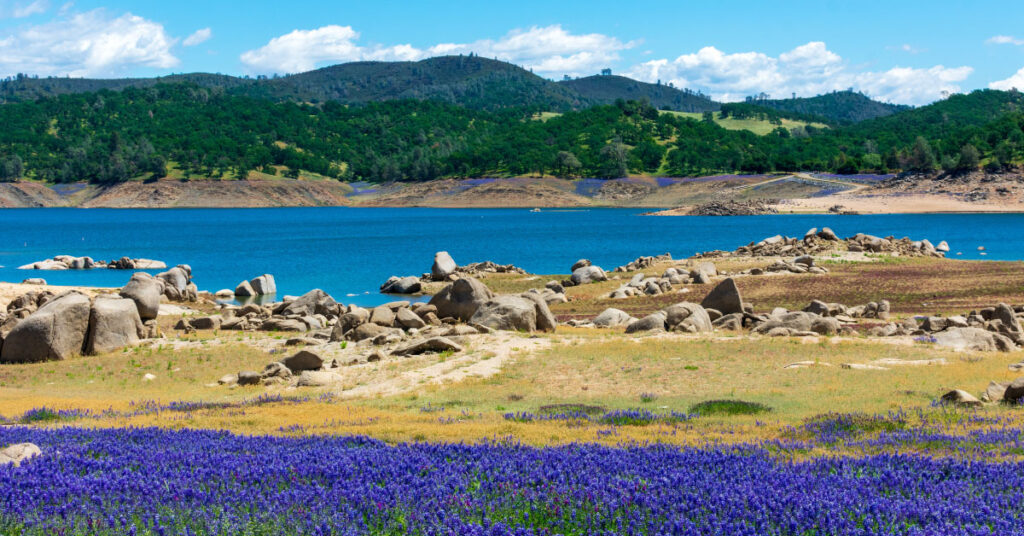
Folsom Lake sits 25 miles northeast of Sacramento in the Sierra Nevada foothills, and it stays open year-round. December is actually one of the more underrated windows to visit — trails are less crowded, temperatures make hiking practical, and the lake tends to fill back up after autumn rain. Here is what you need before you drive out.
What the Park Is
Folsom Lake State Recreation Area covers the lake, its surrounding hills, and a stretch of the American River canyon, making it one of the larger recreation areas within day-trip range of Sacramento. The park covers multiple access points spread across both the Placer and El Dorado County sides of the reservoir: Granite Bay, Beals Point, Peninsula, Rattlesnake Bar, and several smaller entry points, among others.
Activities range from hiking and mountain biking to fishing, horseback riding, and camping. The lake supports trout, catfish, largemouth and smallmouth bass, and perch. A 32-mile paved bicycle trail connects Folsom Lake to Sacramento County parks and eventually reaches Old Sacramento — the same route described in the American River Parkway guide for the downstream section. Lake Natoma, just below Folsom Dam, is managed separately for non-motorized recreation; the Lake Natoma guide at Nimbus Flat covers that section.
Going in December and January
Folsom Lake’s primary season runs April through September. The foothills heat up fast and the lake fills with watercraft and swimmers through summer. November through March is quieter: fewer crowds, open trails, and cooler air that makes multi-hour hikes reasonable. California State Parks runs ranger-led nature programs through the winter; as of late November 2026, upcoming programs include a December 4 Botany on a Hike event. Check the full calendar on the park’s listing at parks.ca.gov.
One note for boaters: as of October 27, 2026, a 5 mph speed limit applies to all motorized vessels on Folsom Lake due to reduced lake levels and navigation hazards. That restriction stays in place until levels rise above 400 feet of elevation — check the park’s advisories page before launching a boat.
Off-season camping at Beals Point is available year-round with no reservations required during the winter months.
Fees and Hours
Day-use entry fees vary by entrance. The main developed areas — Granite Bay, Beals Point, Rattlesnake Bar, Peninsula, and Folsom Point — charge $12 per vehicle. Smaller and more remote access points charge $10. Boat launches run $10. These rates are subject to change; California State Parks may apply higher rates during peak demand periods.
Winter hours run November 1 through March 31: most entrances open at 7 a.m. and close 30 minutes after sunset. The Folsom Point Vessel Inspection Station is closed for the season.
The Details
- Administrative address: 7755 Folsom-Auburn Road, Folsom, CA 95630
- Phone: (916) 988-0205
- Day-use fee: $12 (Granite Bay, Beals Point, Rattlesnake Bar, Peninsula, Folsom Point); $10 (smaller access points)
- Boat launch: $10
- Winter hours (Nov 1–Mar 31): 7 a.m. to 30 minutes after sunset
- Activities: hiking, mountain biking, fishing, horseback riding, picnicking, camping, boating
- Off-season camping: Beals Point, year-round, no winter reservations required
- Current boat restriction: 5 mph limit on Folsom Lake (as of Oct 27, 2026)
- Advisories: Check the park’s current advisories at parks.ca.gov before visiting
Getting There
Granite Bay, the most popular access point, is reached from Interstate 80 via Douglas Boulevard east, then south on Auburn-Folsom Road. Beals Point is nearby on the same road. Rattlesnake Bar is on the north shore and requires more driving time from the Sacramento area. For a full list of access points and trail maps, the California State Parks site has downloadable PDFs organized by section of the lake.
The park is well outside the range of Sacramento light rail; plan to drive. For fall and winter trail options closer to the city, the winter hikes guide covers routes at closer distance from downtown.
Bottom Line
Folsom Lake State Recreation Area is one of the most varied outdoor destinations within an easy drive of Sacramento, and the December-to-March window is an underused stretch to visit. Fees are straightforward, the trail system is extensive, and the ranger-led programs give a reason to plan around a specific date. Check current advisories at parks.ca.gov before heading out — the park posts active alerts for water conditions, closures, and health advisories that are worth reading before you go.